
New U.S.-Mexico Facility Launched to Fight Resurgent New World Screwworm Outbreak
New U.S.-Mexico Facility Launched to Fight Resurgent New World Screwworm Outbreak
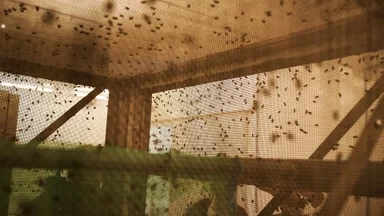
On June 27, the U.S. Department of Agriculture (USDA) officially opened a new 22,000-square-foot sterile fly production plant in Metapa, Mexico. The facility was built to counter a sharp rise in cases of the New World screwworm, a parasitic blowfly whose larvae are lethal to wild and domestic animals.
Per the USDA, the plant took 11 months to complete, and is the product of a collaborative partnership between the current U.S. administration and the Mexican government.
The inauguration comes at an urgent critical moment for animal health across North America. Though the New World screwworm was widely considered fully eradicated back in the 1960s, at least 27 new confirmed infections in animals have been documented in the U.S. amid the current resurgence. The first case of the outbreak was reported on June 3, and the total caseload climbed to 27 by June 29 across two U.S. states. All infections have been found in domestic animals so far, with no active cases detected in wild populations.
To date, Texas remains the only state with ongoing active infections, and state authorities have enacted quarantine orders for areas across 20 counties in the state.
The sterile flies produced at the new facility will be used as part of the Sterile Insect Technique (SIT), a sustainable pest control method that disrupts the species’ ability to reproduce. The process works by exposing New World screwworm pupae to gamma radiation to render them sterile, after which the adult flies are released into pest-infested regions.
“Released through ground and aerial operations, these sterile flies disrupt the pest’s life cycle and support our multi‑agency effort to protect livestock,” the USDA’s official New World screwworm Rapid Response account stated in a post on X.
This strategy eliminates the threat screwworms pose to animals, since all harmful damage is caused by the fly’s maggots, which feed on the flesh of warm-blooded hosts. Over time, the entire wild screwworm population in affected areas will die out, as any mating between wild fertile flies and released sterile flies does not produce viable offspring.